
Cybersecurity conversations have changed. What once centered on firewalls, antivirus software, and keeping attackers outside the network is now focused on a more fundamental question: who and what should be trusted inside an organization’s systems. For small and midsize businesses, this shift matters more than ever. SMBs are no longer peripheral targets. They are increasingly targeted precisely because they often rely on outdated security models that assume internal trust.
Zero Trust is the framework reshaping how modern organizations approach cybersecurity. It is not a single product or technology. It is a mindset that assumes breaches are possible and designs controls accordingly. At CyberBay, our role is to help organizations understand these shifts, cut through vendor noise, and adopt practical, modern security strategies that actually reduce risk. Zero Trust is one of the most important of those strategies.
This article explains what Zero Trust is, why it matters for SMBs, and how platforms like ThreatLocker operationalize Zero Trust principles in real-world environments.
Learn more about CyberBay’s mission and role in the cybersecurity ecosystem.
Zero Trust Explained in Plain Terms
Zero Trust is a cybersecurity model that assumes no implicit trust for users, devices, or applications. Every request for access must be explicitly verified. In traditional security models, once a user logs in or connects to the internal network, they are often trusted broadly. Zero Trust challenges that assumption. It treats every access attempt as potentially risky and requires verification at each step. Rather than focusing on defending a perimeter, Zero Trust focuses on protecting what matters most: applications, systems, and data. CyberBay emphasizes this shift through education, workforce development, and industry collaboration across Tampa Bay and beyond.
Explore CyberBay’s cybersecurity education initiatives.
Why Zero Trust Matters for Small and Midsize Businesses
Zero Trust is often associated with large enterprises, but SMBs face many of the same threats with fewer resources and less margin for error.
SMBs frequently operate with:
-
Smaller IT and security teams
-
Limited time to investigate alerts
-
A mix of legacy systems and modern cloud tools
-
Hybrid or remote workforces
At the same time, SMBs manage valuable data including customer information, financial records, and intellectual property. Attackers know this and increasingly target SMBs through ransomware, phishing, and software exploitation. CyberBay works with organizations at all stages of cybersecurity maturity and consistently sees the same challenge: too much implicit trust built into daily operations. Zero Trust offers SMBs a practical way to reduce risk without enterprise-level complexity.
Looking for guidance or trusted partners? Start here.
The Problem With Implicit Trust
Most successful cyberattacks exploit implicit trust somewhere in the environment. Common examples include:
-
A malicious file that runs because it appears legitimate
-
An attacker using built-in administrative tools after stealing credentials
-
Malware spreading laterally once inside the network
-
A trusted application being abused in an unintended way
Perimeter defenses alone do little to stop these scenarios. Once an attacker is inside, traditional models often provide too much freedom. Zero Trust removes that freedom by tightly controlling what is allowed to execute, who can execute it, and what approved software is allowed to do.
Zero Trust in Practice
Zero Trust is often misunderstood as theoretical or overly complex. In practice, it becomes manageable when implemented through focused controls.
In a Zero Trust environment:
-
Applications are explicitly approved
-
Users are granted access based on role and need
-
Administrative actions are restricted and audited
-
Unknown or unexpected behavior is blocked by default
CyberBay’s approach is education-first. Before recommending tools, the focus is on helping organizations understand why these controls matter and how they fit into real operational environments. CyberBay regularly hosts conversations, panels, and events that translate Zero Trust concepts into actionable guidance.
See upcoming CyberBay events and learning opportunities.
ThreatLocker and the Zero Trust Approach
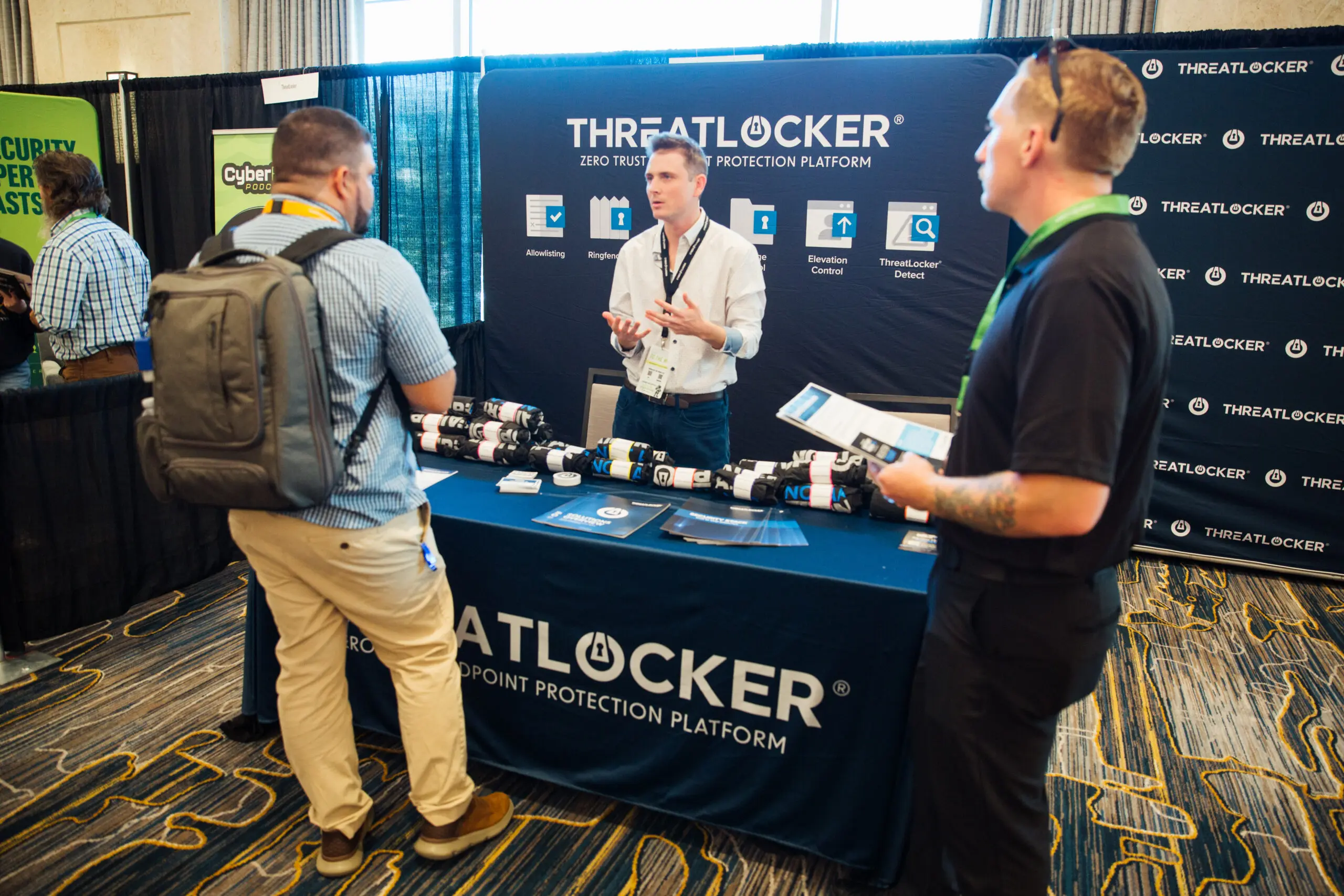
One platform that closely aligns with Zero Trust principles is ThreatLocker. ThreatLocker is built around the idea that organizations should explicitly control what software can run and what that software can access. Instead of attempting to identify malicious behavior after execution, ThreatLocker prevents unauthorized execution entirely. This design directly supports the Zero Trust principle of never trusting by default. CyberBay recently shared a short orientation video on ThreatLocker to help organizations understand how Zero Trust concepts are applied at the application level.
Watch the ThreatLocker orientation video.
ThreatLocker Profile: Applying Zero Trust at the Application Level
Application Allowlisting
ThreatLocker uses application allowlisting, meaning only approved software is allowed to run. Anything not explicitly authorized is blocked by default. This significantly reduces exposure to:
-
Ransomware
-
Malicious scripts
-
Unauthorized installers
-
Living-off-the-land attacks
Allowlisting shifts security from detection to prevention, which is a core Zero Trust principle.
Ringfencing
Allowlisting alone is not enough. ThreatLocker’s ringfencing capability restricts what approved applications are allowed to do.
Examples include:
-
Preventing document viewers from launching system tools
-
Restricting browsers from accessing sensitive directories
-
Limiting administrative tools to approved users and contexts
This aligns with the Zero Trust assumption that even trusted applications should be constrained.
Least Privilege Enforcement
ThreatLocker enables granular user- and role-based policies that enforce least privilege access beyond standard operating system controls. This reduces the impact of compromised credentials and insider misuse.
Visibility and Control
ThreatLocker provides detailed visibility into execution attempts and policy decisions. This supports continuous improvement, auditing, and security maturity. From CyberBay’s perspective, this visibility is essential for learning and long-term resilience, not just incident response.
Zero Trust as a Strategic Advantage for SMBs
Zero Trust is not just about security. It is about operational resilience.
For SMBs, adopting Zero Trust can:
-
Reduce ransomware-related downtime
-
Lower recovery and response costs
-
Improve confidence in remote work environments
-
Support compliance and audit readiness
-
Strengthen trust with customers and partners
CyberBay advocates for Zero Trust because it enables organizations to move from reactive security to intentional control.
Getting Started With Zero Trust
Zero Trust does not require a complete overhaul overnight. The most effective approach is incremental.
A practical starting point includes:
-
Inventorying applications and users
-
Identifying what truly needs to run
-
Restricting unnecessary administrative access
-
Implementing application-level controls
-
Reviewing and refining policies over time
Education is critical throughout this process. Tools alone do not create Zero Trust. Understanding and intent do. CyberBay supports organizations at each stage by connecting them with trusted partners, educational resources, and real-world expertise.
Start a Zero Trust conversation with CyberBay.
CyberBay’s Point of View
Zero Trust represents a shift from assumption to intention. Instead of assuming users, devices, and applications are safe, Zero Trust requires organizations to be explicit about what they allow and why. CyberBay’s role is to help SMBs navigate this shift with clarity and confidence. That means leading with education, frameworks, and outcomes rather than fear or hype. ThreatLocker is one example of how Zero Trust principles can be applied effectively for SMBs seeking prevention, visibility, and control.
Final Thoughts
Cyber threats are not slowing down, and SMBs are no longer on the sidelines. Zero Trust provides a realistic and effective framework for reducing risk in modern environments. By understanding Zero Trust and learning how platforms like ThreatLocker operationalize its principles, SMBs can move from reactive defense to intentional security. Zero Trust is not about locking everything down. It is about knowing exactly what should be allowed and preventing everything else. That clarity is what modern cybersecurity demands.