
Group 4
CYBER INSURANCE (New in 2026)
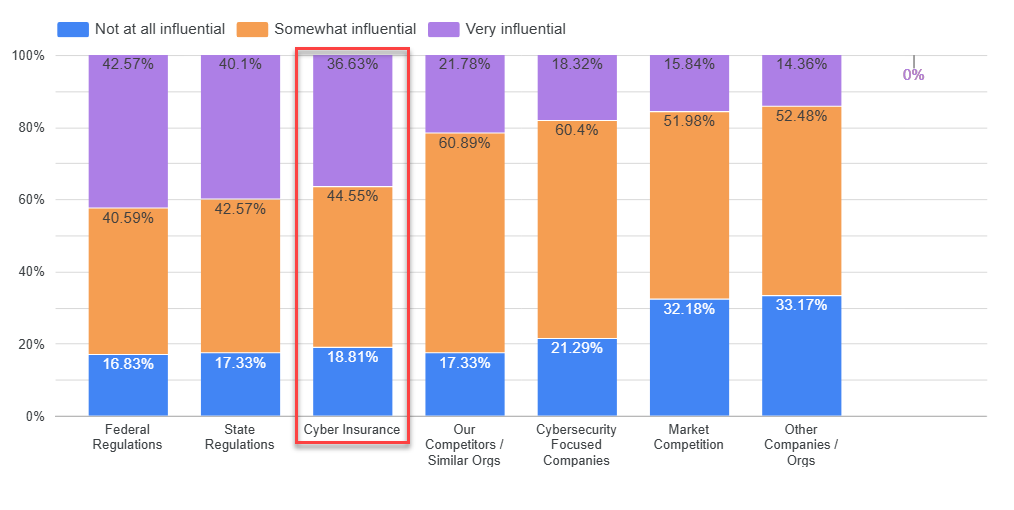
The Cyber Bay Insurance Working Group will convene insurance, cybersecurity, business, government, and policy stakeholders to conduct a comprehensive, insights-driven analysis of the current cyber insurance landscape. This initiative is directly informed by the insights of the CyberBay 2026 survey, which identified Cyber Insurance as one of the top three external forces—alongside Federal Regulations and State Regulations—actively driving organizational cyber hygiene.
Leadership
Working group leadership and research direction
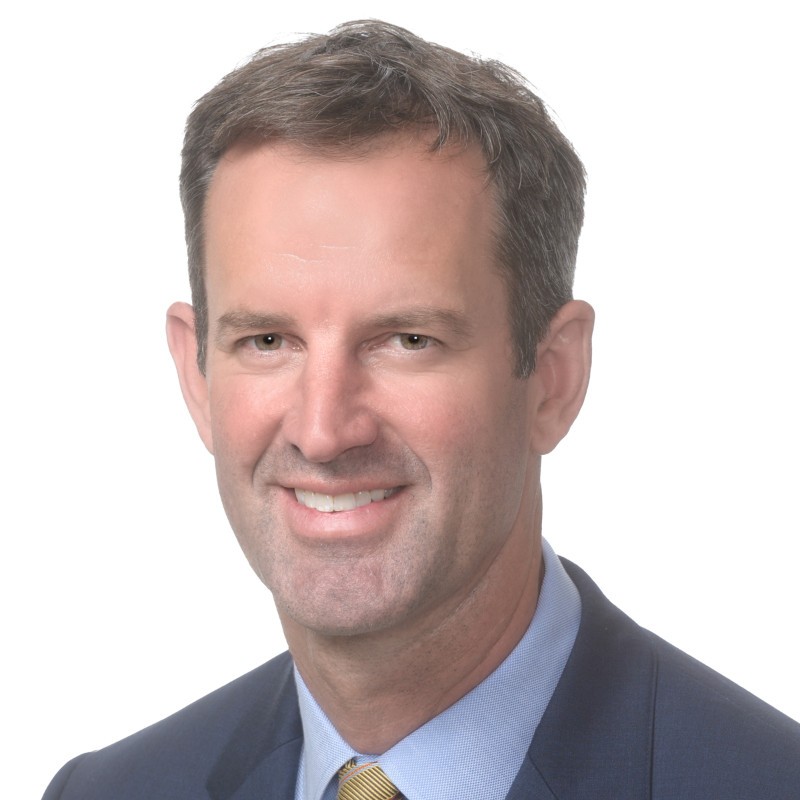
Bryan Langley
Founder and Principal, Langley CI (Critical Infrastructure) LLC
Bryan J. Langley is the Founder and Principal of Langley CI (Critical Infrastructure) LLC. Leveraging senior executive leadership across state government, critical infrastructure, and public safety, Bryan advises enterprise and public-sector leaders on bridging physical-cyber security gaps, emergency management, and operational resilience. He currently serves as Chair of the CyberBay Cyber Insurance Working Group and as a Senior Fellow at the Center for Digital Government.
Prior to establishing Langley CI, Bryan served as Senior State Cybersecurity Official at Cyber Florida (University of South Florida) and Executive Director of the Indiana Department of Homeland Security. His background encompasses federal, state, and corporate security leadership, ranging from White House operations/logistics and international diplomatic travel security to global corporate security for Fortune 200 operations.
Bryan specializes in breaking down institutional silos to establish measurable
governance, supply chain risk management, and all-hazards preparedness. Through
client partnerships with organizations such as Experior Group—delivering Red Ball
Drills and physical-cyber assessments—and Devensa Advisory on public and private
sector strategy, he helps organizations improve business hygiene and meet key
maturity benchmarks. Bryan holds a degree in Criminal Justice from California State
University-Bakersfield and speaks nationally on critical infrastructure defense, school safety, and public-private security frameworks.
Overview
The CyberBay CYBER Insurance Working Group
The general intent is to identify and reduce any “friction” that may exist in the marketplace between insurers and the insured, with some focus on the needs of SMBs including public sector organizations.
Mission
Our Mission
The CyberBay Cyber Insurance Working Group brings together leaders from insurance, cybersecurity, business, government, and public policy to better understand today’s cyber insurance landscape.
Building on insights from the CyberBay 2026 Survey, the group explores the challenges facing both organizations seeking coverage and the insurance industry. Through collaboration and shared learning, we aim to identify opportunities to reduce complexity, strengthen trust, and support a more resilient cyber insurance marketplace.
The working group examines the challenges organizations face when obtaining and maintaining cyber insurance, including evolving security requirements, affordability, application complexity, and changing policy expectations. At the same time, we explore the issues insurers face in assessing cyber risk, accessing reliable security data, navigating regulatory requirements, and managing emerging threats.
By bringing together these perspectives, the CyberBay Cyber Insurance Working Group seeks to improve understanding across the cyber insurance ecosystem and develop practical insights that help strengthen Florida’s cyber resilience and long-term cyber insurance marketplace.
Deliverables
CyberBay Summit Deliverable
The Cyber Insurance Working Group will present its findings at the CyberBay Summit in March of 2027. These findings, and the follow-on discussions it will generate, will set up the Working Group for a Phase II effort in 2027/28 to address the obstacles that have been identified.
Current Progress
Based on the Working Group’s recent discussions and a comprehensive review of existing research, the following research questions (RQs) have been identified as key candidates for investigation:
Rq1
Direction
Getting Covered
Scope and strategic context
Acquisition Barriers & Onboarding
Key Exploration Gaps
Key operational/financial obstacles, administrative costs, application stalls, and trust gaps.
Rq2
Direction
What Coverage is Worth
Scope and strategic context
Coverage ROI & Continuous Risk Monitoring
Key Exploration Gaps
ROI on security tools, continuous monitoring impacts on terms, and expectation gaps.
Rq3
Direction
Where the Market Stops
Scope and strategic context
AI Risk & Market Capacity
Key Exploration Gaps
Policy limitations on AI, unplaceable risks, and total market capacity bounds.
Rq4
Direction
When a Claim is Made
Scope and strategic context
Claims Friction & Post-Loss
Key Exploration Gaps
Root causes of friction, disputed application data, and post-loss payout expectations.
Research Timeline
Timeline and Next Steps
The Working Group will tackle RQ1, RQ2, and RQ4 as priorities between now and the March CyberBay Summit. The category of the cyber insurance market suggested by RQ3 will continue to be monitored, but due to the dynamic nature of AI and its potential for huge impact on cyber risk, it will not be subjected to any survey rigors in the near term. Our timeline is shown below:
Nov / Dec: Focus Group Research on RQ1 and RQ4
Jan / Feb: Survey Research on RQ1 and RQ4
Jan / Feb: Focus Group Research on RQ2
Mar: Presentation of findings at the CyberBay Summit
Members
Members of the Cyber Insurance Working Group
The working group brings together stakeholders from the insurance, cybersecurity, business, government, and policy sectors to look at the issues from multiple perspectives.
Industry, Employers & Recruiters
Scott Marshall, Swenson Associates LLC, Principal
Brian Blakley, Bellini Capital, CISO
Chris Kennedy, Brown and Brown, Construction Risk and Insurance Specialist
Monika Coleman, Preferred Governmental Insurance Trust (FL), Liability Claims Supervisor
Brendon O’Brien, TCM, CFO
Richard DeKorte, Independent Consultant (formerly CyberCube Insurance Analytics), Consultant
Joyce Rancani, Qualys, Chief Technology Security Officer
Diedre Milton, FAMU, SVP Risk Insurance
Arani Adhikari, Armour Cyber, Chief Strategy Officer
Ryan Seymour, ConnectSecure, VP, Consulting and Education
Michael Rogers, MOXFIVE, Managing Director of Resilience Advisory
Michael Quirk, Securipolis, President/CISO
Bidemi Ologunde, PhD, CICA, Citi, Insider Risk & Investigative Intelligence
Higher Education & Academic Leadership
John Selover, Panhandle Area Educational Consortium, Executive Director
Henry Martin, Walton County Public Schools, CIO
Dr. Varol Kayhan, University of South Florida – MUMA, Professor
George Burruss, University of South Florida, Professor
John Licato, USF / Actualization.AI, Associate Professor / CEO
Peyman Abdollahi, The University of Tampa, Cybersecurity Systems Engineer
Federico Giovannetti, University of Tampa, Assistant Professor of Cybersecurity
Government, Public Sector & Workforce Partners
Scott Zane, City of Edgewood, IT Manager
Mike Van Zweiten, FL Commerce, CIO
Mike Andrews, FLGISA, President
Mike Taylor, FL League of Cities, Associate Director, Technology Services
Richard Beynon, CareerSource Tampa Bay, Vice President of Technology
Emerging Talent & Program Representation
Jereme Monette, USF – Op K-12, Lead: K-12 Cyber FL
Emilio F. Salabarria, Cyber Florida, Sr. Cybersecurity Program Consultant
join the conversation about cyber insurance
The CyberBay Community forum is designed to keep things moving year-round, not just at the events. Whether you’re picking up a conversation, exploring ideas, or getting involved in a working group, this is where it all continues.