
Group 3
Workforce Development (2025-2026)
The CyberBay Workforce Development Working Group was convened as a structured, multi-session focus group to examine workforce gaps and identify alignment strategies across education, industry, and workforce systems.
Leadership
Working group leadership and research direction
The initiative is led by a researcher and workforce strategist whose work focuses on employer-aligned training, multilingual education, portfolio-based validation, and measurable workforce readiness.
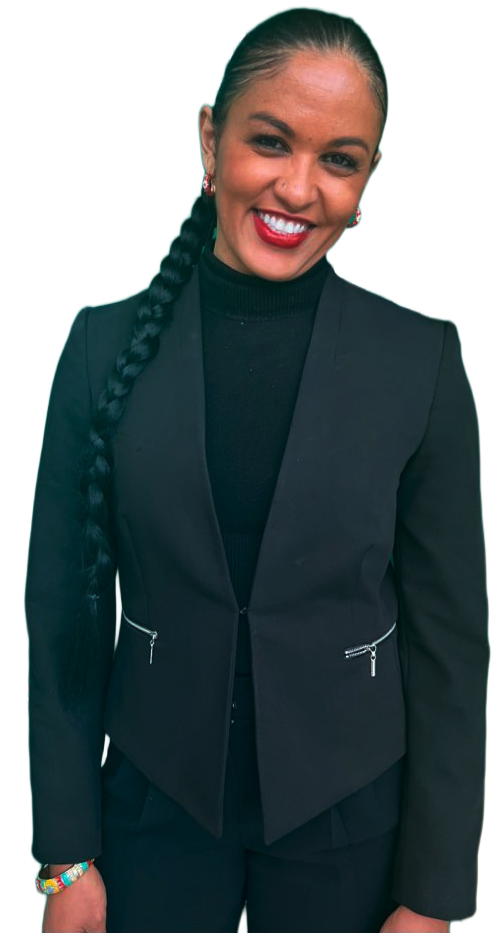
Dr. Michelle Angelo-Rocha
Cyber Research Analyst, Cyber Florida · Adjunct Professor, University of South Florida
Dr. Michelle Angelo-Rocha is a community-based qualitative researcher and workforce strategist specializing in cybersecurity workforce development and multilingual education. She leads the CyberBay Workforce Development Initiative, a regional, cross-sector effort focused on aligning education systems with entry-level cybersecurity workforce demands, and serves as lead researcher and report author for the CyberBay Workforce Working Group.
Her work advances employer-aligned training models that emphasize hands-on experience, portfolio-based skill validation, and measurable workforce readiness. She is the author of It Takes More Than a Certificate: A Holistic Model for Cybersecurity Workforce Education and co-author of The Search for the Cyber Unicorn. Her research focuses on talent pipeline performance, skills alignment, and the limitations of traditional credentialing pathways. She serves on the 2026 National Initiative for Cybersecurity Education (NICE) Conference Committee and holds a PhD in Educational Leadership and Policy Studies from the University of South Florida.
Mission
The CyberBay Workforce Development Working Group
Our mission is to strengthen Florida’s cybersecurity workforce by helping emerging cybersecurity professionals develop, document, and communicate employer-recognized evidence of their skills through applied learning, professional portfolios, and collaboration with industry, educators, and workforce partners.
Deliverables
The Workforce Development working group Deliverables
aims to bridge the gap between regional cybersecurity talent and employer needs. Here is a summary of their primary deliverable
Phase I completed
The Phase I Deliverable (March 2026)
The primary output was a Comprehensive Report and Executive Presentation delivered at the March CyberBay event, presenting key findings and regional workforce recommendations.
Core Components
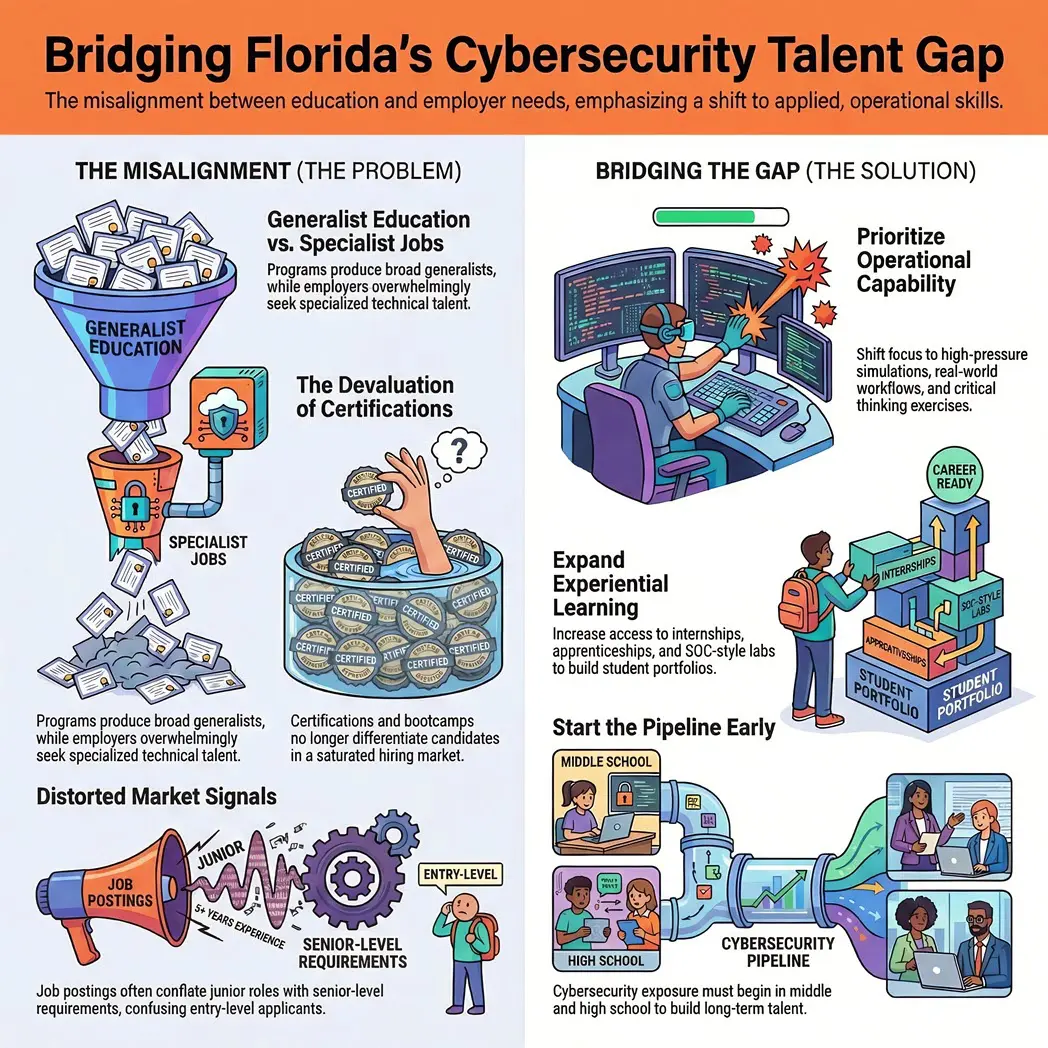
The “Gap” Diagnosis: A determination of whether the shortage is a volume issue (not enough people) or a quality issue (lack of practical, nuanced experience).
- Requirement Mapping: Insight on the specific skills, experience, portfolios and even extracurricular interests that employers actually value versus what the current ecosystem provides.
- Validated Findings and System-Level Insights: Evidence-based findings derived from cross-sector input identifying key challenges across education, hiring practices, and policy structures, including misalignment between training and employer expectations, limited access to applied learning, and structural barriers to workforce entry.
- Development of a Regional Workforce Alignment Action Plan: The Working Group developed an action plan with system-level recommendations to strengthen cybersecurity workforce pathways, prioritizing experiential learning, employer engagement, and institutional alignment. Findings were presented at the 2026 CyberBay Summit, where stakeholder feedback refined Phase II priorities and ensured alignment with regional workforce needs.
Working Group Process
The CyberBay Workforce Development Working Group
Seventeen participants were strategically selected to ensure cross-sector representation, including employers from private and government sectors, HR leaders and recruiters, cybersecurity practitioners, higher education faculty and program leaders, K–12 representatives, workforce and economic development partners, and entry-level professionals. This composition is a core strength of the initiative, enabling direct alignment between hiring expectations, educational design, and workforce entry pathways.
Over four months (December 2025 to March 2026), participants engaged in facilitated sessions progressing from analyzing labor market dynamics and defining workforce challenges to examining curriculum, experiential learning, and system-level constraints. The process culminated in validated findings and actionable recommendations to inform best practices and policy considerations in Florida.
Members
Members of the Workforce Development Working Group
The working group brings together leaders from industry, education, government, workforce development, recruiting, and early-career talent to ensure the findings reflect real hiring conditions and real pathway challenges.
Industry, Employers & Recruiters
- April M. Augustine, Idaho National Laboratory, Director, National Security Workforce Development Programs
- Drew Fearson, TENEX.ai, President of Talent
- Eric Foster, TENEX.ai, Chief Executive Officer
- Adam Hall, ReliaQuest, Cybersecurity Lead
- Jessica Cassidy, TENEX.ai, Head of Talent, Cyber Workforce Specialist
- Matt Schwope, Senior Federal Resource Manager & Intelligence Community, Cybersecurity Recruiter & Mentor
- Dr. Sasha Vanterpool, Skillrex, Senior Cyber Workforce Consultant
- Duy Dao, Security Operations Center (SOCAP), Cyber Florida, Manager
Higher Education & Academic Leadership
- Dr. Addye Buckley-Burnell, University of South Florida, Associate Vice President & Executive Director, Center for Career & Professional Development
- Dr. Sriram Chellappan, University of South Florida, Professor, Bellini College of Artificial Intelligence, Cybersecurity, and Computing
- Dr. Alex A. Djahankhah Maj. USMCR, Florida SouthWestern State College Professor
- Dr. Huzefa Kagdi, Florida Gulf Coast University, Dean of Engineering
- Dr. James Welsh, University of South Florida, Director, USF Youth Experiences / FCIT
Dr. Marbin Pazos Revilla, USF Bellini College of Artificial Intelligence, Cybersecurity, and Computing, Assistant Professor of Instruction; Coach, CyberHerd
Government, Public Sector & Workforce Partners
- Richard Benyon, The Stratus Group, President
- Alex Espinosa, U.S. Department of Defense, Network Operations Manager
- Dr. Natalie Foster Johnson, CyberMINDS Research Institute, Executive Director, Information Security Administrator, Major U.S. Airport Operator
Emerging Talent & Program Representation
- Sanae Elmachhour, University of South Florida, Undergraduate Cybersecurity Program, CyberHerd & Cyber Florida SOCAP Member
- Camille Watson, Saint Leo University, Graduate Student, MSc Cybersecurity
- Tim Kircher, Bellini CAICC Ambassador, CyberBay Working Group Student Advisor, USF Ambassador
Jessica Couillard, USF Bellini College of Artificial Intelligence, Cybersecurity, and Computing, Program Coordinator, Tech Career Accelerator
Katelyn Rumenik, USF Bellini College of Artificial Intelligence, Cybersecurity, and Computing, Assistant Director, Tech Accelerator Program
Help shape the future of cybersecurity talent.
Explore the findings, follow Phase II progress, and connect with the CyberBay ecosystem as workforce development moves from insight into implementation.