
Survey

CyberBay Survey Report 2025

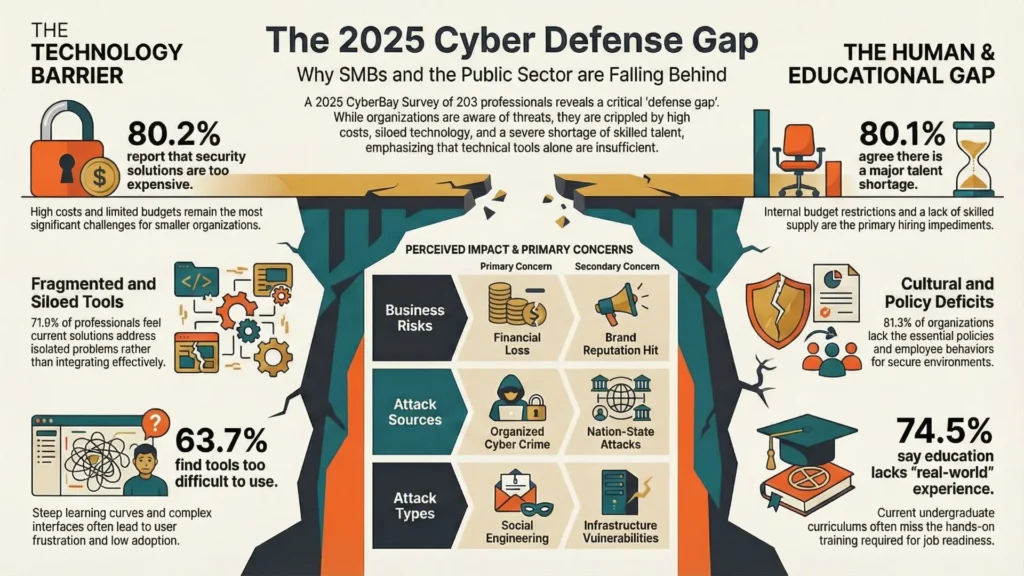
The 2025 CyberBay Survey reveals a clear and urgent gap between the rapid expansion of digital connectivity and the slow adoption of effective cybersecurity practices. Across sectors, organizations recognize the growing threat landscape—yet face persistent barriers including high costs, fragmented solutions, usability challenges, and a critical shortage of skilled professionals.

A strong majority of respondents highlight that existing cybersecurity tools are too expensive (80.2%) and poorly integrated (71.9%), while nearly two-thirds (63.7%) report they are difficult to use. At the same time, 81.3% believe organizations lack the internal policies, culture, and behaviors necessary to maintain secure environments.

Beyond technology, the issue is systemic. Talent shortages (80.1%), hiring constraints, and gaps in both academic and professional education continue to weaken cybersecurity readiness. Despite this, awareness of risk is high—over 70% acknowledge that their organization is likely to face a serious cyber threat.

These findings point to a critical need for more accessible, integrated, and human-centered cybersecurity solutions—supported not just by better tools, but by stronger education, workforce development, and organizational practices.
CyberBay 2026 Survey Report

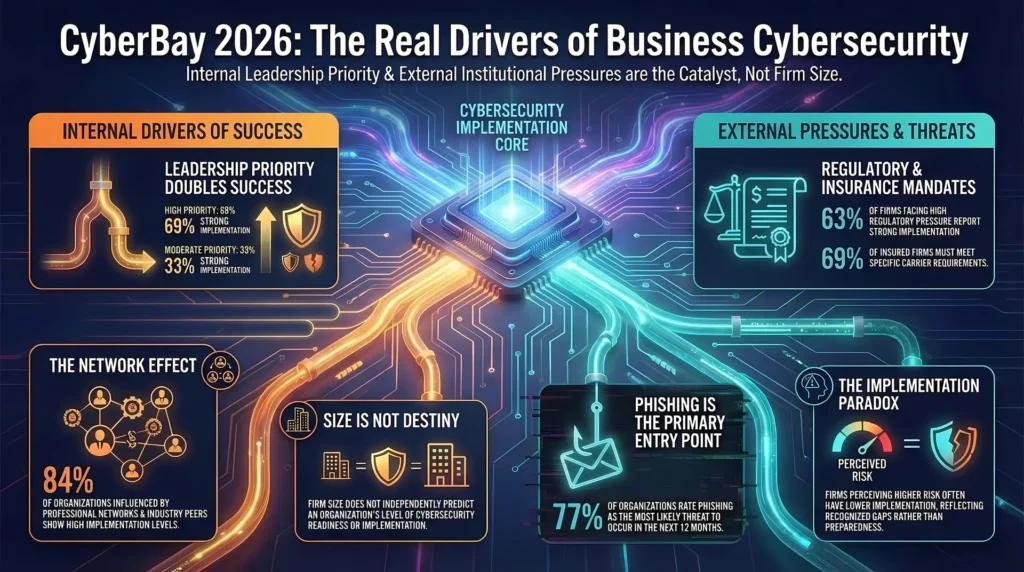
This report highlights a critical truth: cybersecurity effectiveness is driven less by organization size and more by leadership priority, external influence, and organizational maturity. Firms that elevate cybersecurity to a leadership-level concern are significantly more likely to implement strong security practices, with adoption rates more than doubling compared to those where it is treated as a moderate priority.

External forces also play a defining role. Organizations influenced by professional networks, industry guidance, and regulatory expectations consistently demonstrate stronger cybersecurity implementation. These institutional pressures help shape standards and accelerate the spread of best practices across sectors.

However, perception of risk does not always align with action. Organizations that perceive higher cyber risk often report weaker implementation—suggesting that awareness alone is insufficient without the structure, resources, and leadership commitment to respond effectively.

Phishing remains the most widely recognized and likely threat, reinforcing its role as a primary entry point for cyber incidents. Meanwhile, firm size proves to be a weak predictor of cybersecurity readiness once leadership focus and organizational factors are considered.

Overall, the findings emphasize that improving cybersecurity outcomes requires a coordinated approach—where external expectations are reinforced by internal leadership, translating awareness into consistent, effective action.

Scroll to Top